

As the days shorten and a productive summer gives way to the shortages of winter, it’s time to turn honey bee hives into havens against the worst ravages of the weather.
Robbie Baird, North Dorset Beekeepers Association.
There’s no getting away from it, honey bees work themselves to death during the summer months… quite literally. In summer, each honey bee (Apis mellifera if you like your Latin nomenclature) has a life expectancy of around six weeks. Unlike many other types of bee, which tend to be solitary in nature, honey bees live in colonies. Their lives are all about doing what’s needed for the whole colony. They spend their first three weeks doing jobs in the hive where the colony raises its young. Their second three weeks are spent finding sources of food and bringing it back for everyone to use. It’s this period of foraging for nectar and pollen that ages each honey bee fast. Think about that pure, home-produced, one-pound jar of honey in your kitchen. Bees will have had to visit more than 2 million flowers to bring back enough nectar to make it. They’ll have flown more than 55,000 miles. That’s twice the distance round the world. No wonder their lives are so short!
But now the days are getting shorter and the temperatures are falling. With winter just around the corner, life in the honey bee colony is starting to change. The focus is all about winter survival.
The bee colony will have amassed lots of food in the summer months and although they’ll have used some for getting by and they’ll have shared some of their harvest with us beekeepers, a lot will have been stored in sealed wax comb. That’s just like our jars in the cupboard and can be opened for use when needed – and it’ll be needed to feed the colony during the winter months when the individual bees huddle together for warmth. The honey bee is cold-blooded so has to “shiver” to create heat and stay alive. In winter, they’ll maintain the centre of their huddle at about 27°C. That takes a lot of energy, which means the bees need plenty to eat.
With most flowers now finished for the year, the honey bee becomes dependent on its stores for survival. You’ll see many insects on ivy flowers (Hedera helix) in autumn and honey bees are no exception. This is one of the last sources of nectar before winter sets in.
During the summer, a strong honey bee colony will have about 55,000 individual bees. That’s far too many mouths to feed if they’re to eke out their stores to get through the colder months. With much less active flying to be done in winter, each bee can expect to live for five or six months and their numbers will fall to a low of around 5,000–10,000 per hive before spring arrives – just about enough to get things going again in spring and to look after the queen. She won’t be laying many eggs in winter, but she is precious – there’s only one in each colony and she’s responsible for laying all the eggs for future generations of bees. Male bees (called drones) are also ejected from the colony – they don’t do any work and will eat precious stores. The colony will make more males in spring, but that’s another story.
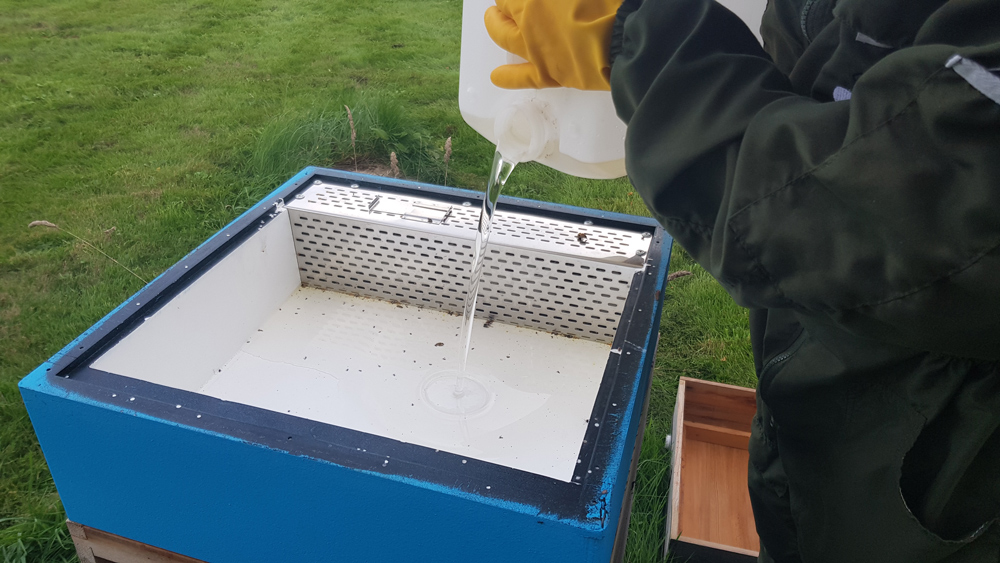
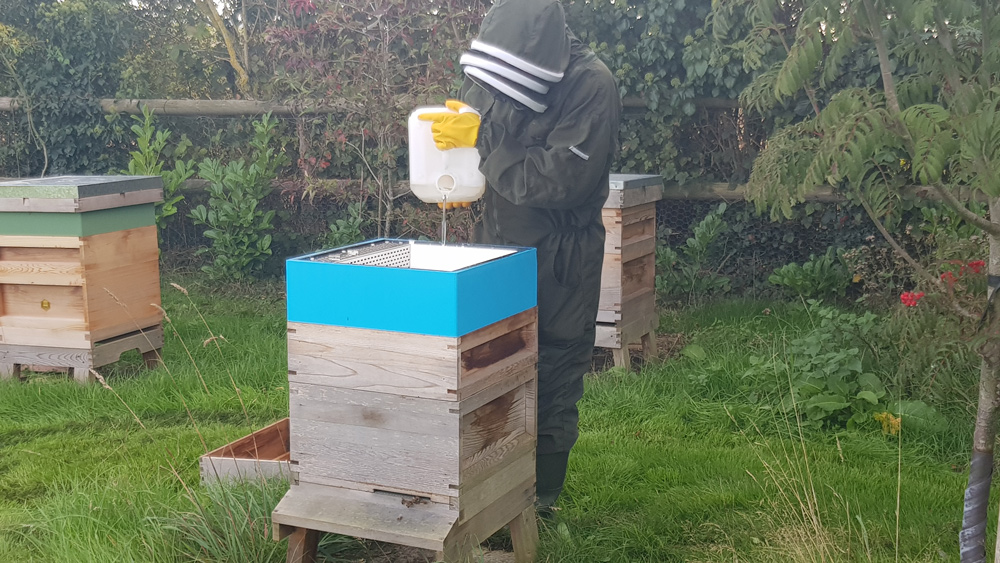
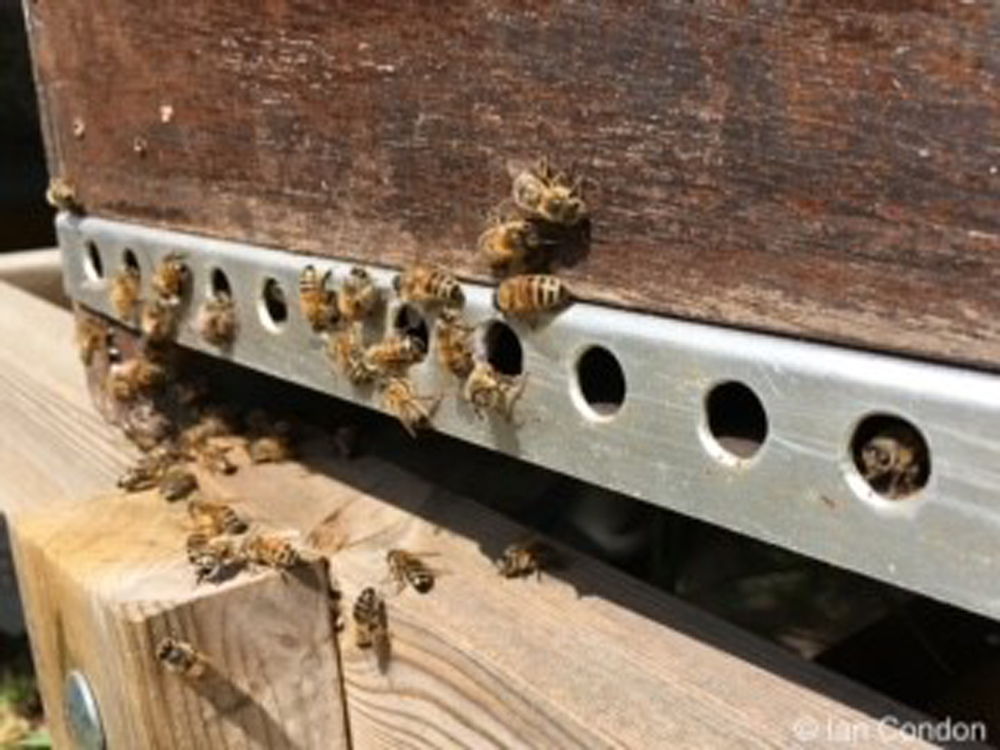
Beekeepers do all we can to make sure each colony has the best chance of reaching next spring. Weak colonies will have been combined with a stronger one to give it a better chance of survival. We’ll give them some extra food – concentrated sugar syrup – which they add to their stores and will use just like nectar. We’ll check to make sure the hives are well secured against winter gales and will add some extra insulation – a bit of expanded polystyrene in the roof will reduce heat loss from the hive, just as loft insulation will reduce heat loss in your own home. We’ll reduce the size of the hive entrance to make sure that other animals looking for somewhere to get out of the cold can’t get in, and we’ll wrap hives with chicken wire to deter hungry green woodpeckers. Then we do all we can to leave the colony undisturbed – opening the roof or causing the cluster to break up causes a lot of heat loss and increases their need for food. And there’s more we’ll be doing during the winter months, but that can wait for next time.
Bees don’t actually sleep, but it does feel like we’ve put them to bed for winter.







Leave a Reply