

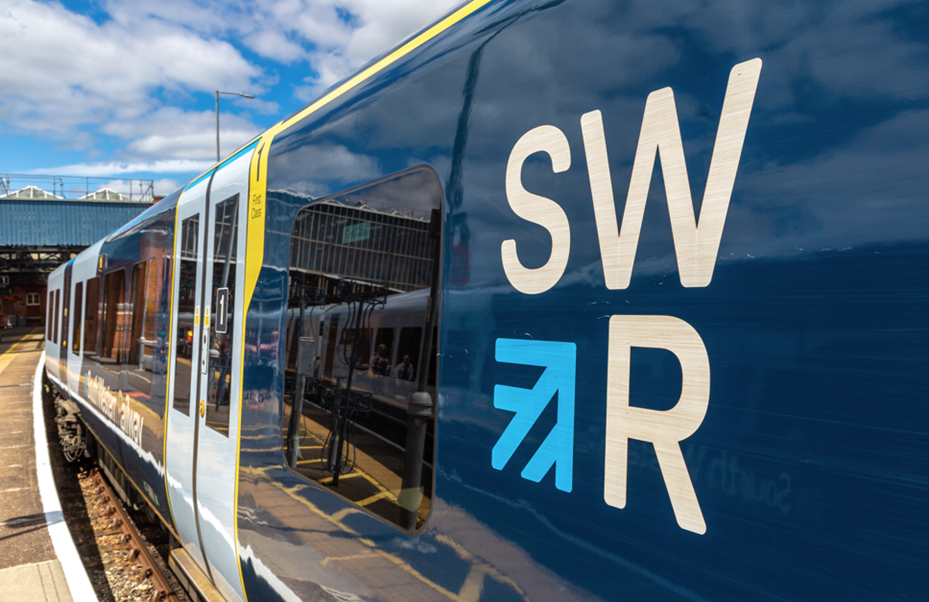
WHEN South Western Railway (SWR) was nationalised earlier this year, the government described it as a “new dawn for rail” – but rail users have instead faced a summer of cancellations and delays.
Rail users have repeatedly faced issues when travelling on the West of England Line which runs from London Waterloo via Basingstoke, Salisbury, Gillingham and Yeovil to Exeter.
This comes after the introduction of a reduced timetable with one train per hour from London Waterloo to Yeovil and one train every two hours to Exeter, due to hot weather conditions and soil moisture deficit.
Some passengers have been asked to get on rail replacement buses due to cancellations, with some trains even stopping prematurely.
When replacement buses are in action, they reportedly stop at every stop along the way, dragging journeys out far longer than they should.
Communication of these cancellations and changes have been described as lacklustre, as rail users say the app often says something different to the announcement on the trains.
READ MORE: Obsessive ex-officer used police systems to stalk ex girlfriend and her new partner
READ MORE: Majority of people in south west would pay more for higher-welfare British products, survey reveals
“We’ve now come to expect we will have difficulties on at least one leg of our journey,” one rail user said.
“We were travelling through Honiton on August 30, but the train was cancelled without warning. The announcement said that it had been cancelled due to a shortage of crew.
“While I appreciate this is sometimes unavoidable, its shocking how frequently this is happening.”
The rail user said that on one recent trip, the train was cancelled without warning due to staff shortages.
SWR apologised for the staff shortages that impacted passengers, saying they experienced a small number of additional cancellations due to unexpected colleague absences.
SWR was nationalised in May earlier this year – the first service to transfer back into public control under new legislation, the Passenger Railway Services (Public Ownership) Act 2024.
In an announcement back in May, the Government said operators would have to “earn the right to be called Great British Railways” and would have to meet rigorous, bespoke performance standards on things like punctuality, cancellation and passenger experience.
Some rail users have linked the poor performance of SWR over the summer with the move to nationalise the service, but SWR refute this, saying it is not linked in any way to the transfer into public ownership.
They said delays and cancellations stem from the south of the country experiencing some of the driest conditions for around 200 years.
This has dried out and shrunk the clay soil embankments that support tracks across long stretches of track between Gillingham and Axminster – a problem known as ‘soil moisture deficit’.
“Because track levels have been disturbed, our trains cannot travel safely at their normal speeds,” SWR said.
“Most of the route west of Salisbury is made of single track, with only a small number of places for trains travelling in opposite directions to pass each other.
“With speed restrictions stretching over 12 miles, trains are not able to pass each other at their allotted times, and so it is not possible to run services to the normal timetable.”
Further alterations to the timetable will be in place from Sunday, September 21.
Rail users faced with a delay of 15 minutes or more can claim a Delay Repay – a national scheme that makes it easier to get compensation for delayed journeys.




This appalling SWR service continues to deteriorate. Changes to timetable, a reduced service and last minute cancellations are making it impossible for commuters reliably to reach their places of work on time thus threatening careers and livelihoods. Local holidaymakers and visitors from abroad can only look forward to disrupted travel causing them stress and uncertainty about being able to continue with the onward journeys they have booked and planned. Families who need to use the rail service abandon meet-ups and social activities. Whatever the reasons it is a sad, broken and distressing situation. What hope is there of any improvement? The outlook is depressing.
When I travelled recently the trains were running in accordance with the revised timetable but this involved some waiting at stations with passing loops to enable them to pass each other at the right time however there seemed to be quite a lot of passengers. It might have been better to have run less but longer trains if that was possible. My train arrived in London at precisely the right time as it ran to Waterloo at the normal times after stopping at Tisbury. I can see why people might be concerned as similar concerns were raised before this former double track mainline was reduced to single track in 1966/67 and the route was closed for many years beyond Exeter.
I had to laugh at an advert for Trainline on a SWT train recently: “Smooth ticketing from before this train was born. Trainline, est 1997.” The current rolling stock was introduced in 1993.
It’s A Big Joke Pay A Service That’s Poor Make You Wonder If They Want To Close All The Rail Way And Charge For Standing Up