

As winter recedes to make way for spring, you’ll start to see flashes of light and colour in the undergrowth as the early spring wildflowers begin to emerge. Here are three to look out for when walking in your local area.
by Alex Hennessey, Dorset Wildlife Trust
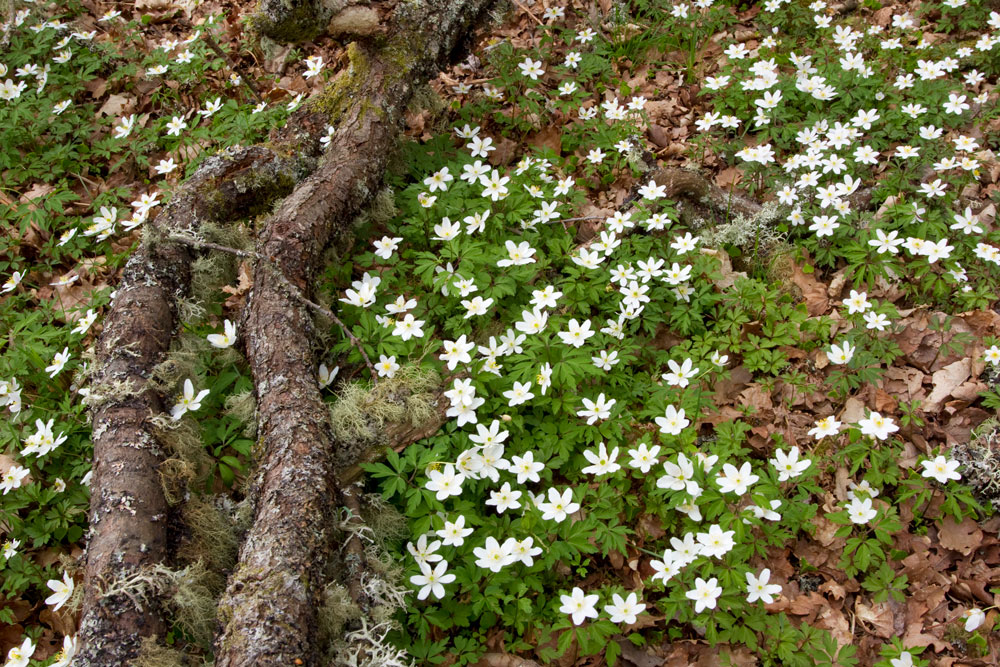
Girdlers Coppice in Sturminster Newton is managed by Dorset Wildlife Trust and boasts a beautiful
display of wood anemones at this time of year. Photo by Mark Hamblin
Marsh marigold (March to July)
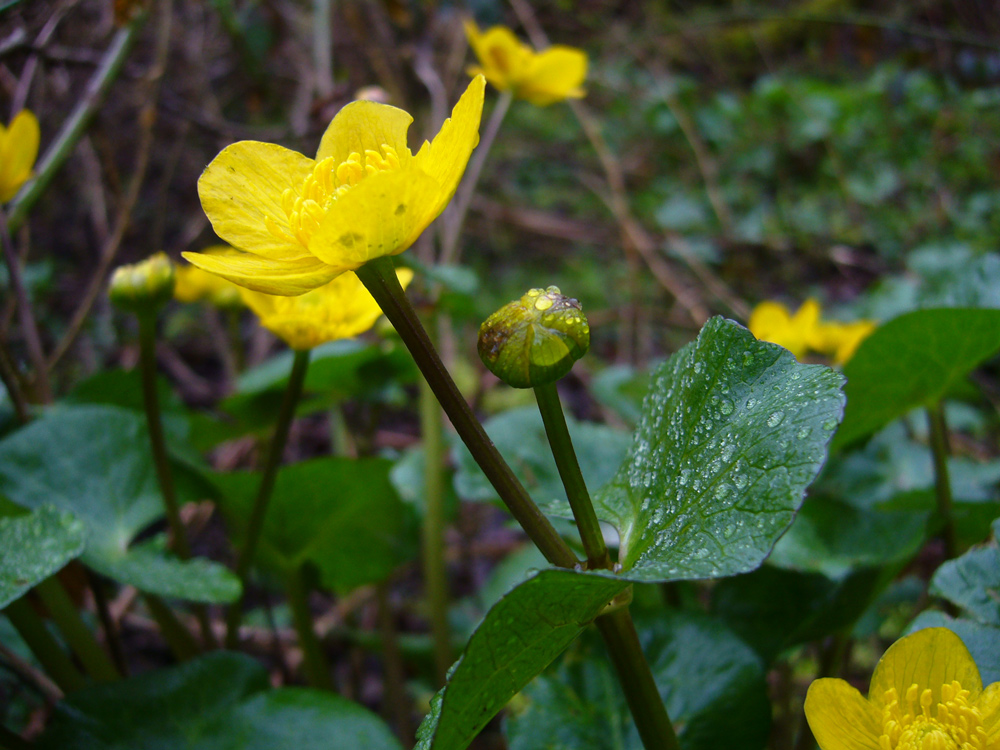
The marsh marigold (Caltha palustris), as its name suggests, can be found in wet woodland, ponds, marshes, damp meadows and ditches. Its bright yellow blooms, reminiscent of buttercups, make it easy to spot. Even before the flowers open, swollen buds that start off like small brussels sprouts and its glossy, deep-green scalloped leaves, give it away. Marsh-marigolds are also a brilliant addition to a wildlife-friendly pond, as it provides shelter for frogs and important early nectar for insects.
Primrose (December to May)
The Primrose (Primula vulgaris) can flower from as early as December in mild winters, appearing and flowering all the way through the spring until May. Their creamy yellow petals with a vibrant yellow centre, perched atop a rosette of wrinkly leaves, make this plant unmistakeable. Primroses thrive in woodland clearings, hedgerows and grassland, and will sometimes even pop up in gardens. Primroses are the foodplant of the caterpillars of the rare Duke of Burgundy butterfly, which is a Priority Species under the UK Post-2010 Biodiversity Framework.
Wood anemone (March to May)
Wood anemones (Anemone nemorosa) grow in mature woodland and are easy to identify. They are low-growing, with six to seven large white or pink-tinged ‘petals’ (these are actually sepals) forming a star around a centre of clustered yellow anthers. Its leaves are lobed, and it has a thin, red stem. Wood anemones grow







Leave a Reply