

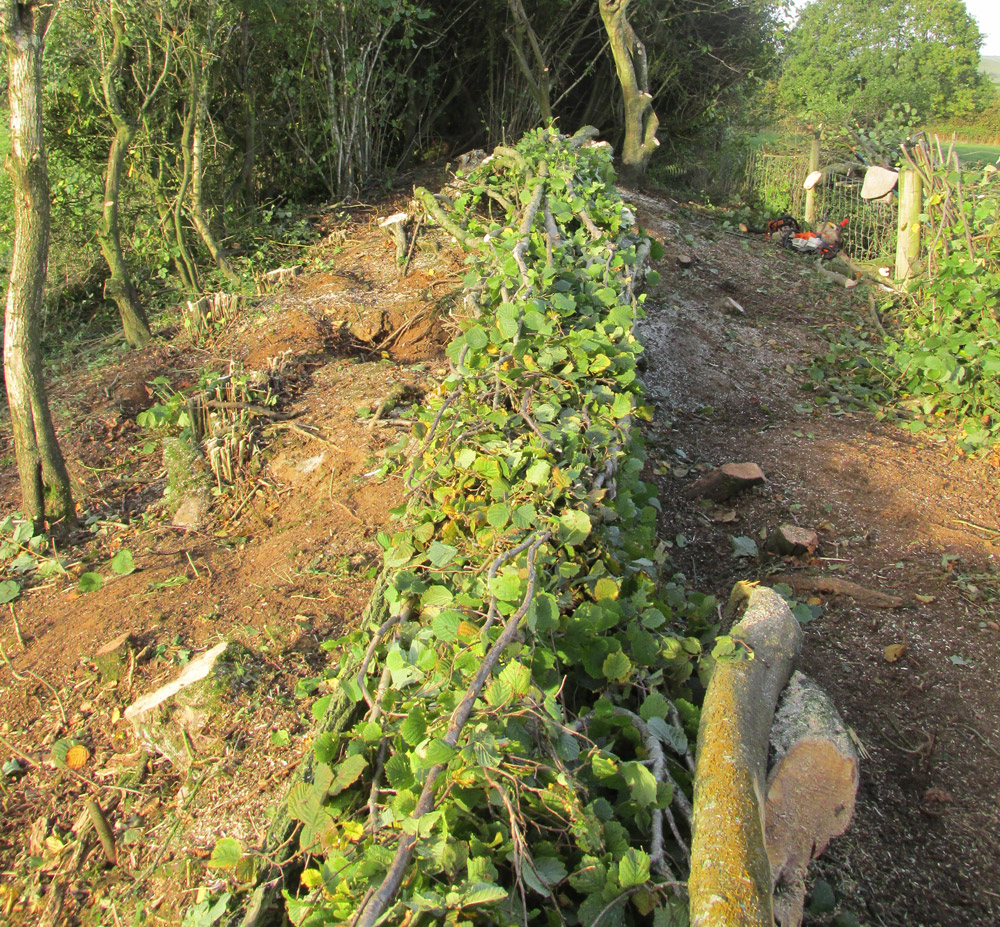
While everyone is looking forward to the balmy days of summer, enjoying trees in full leaf and green hedgerows, Russell Woodham, The Dorset Hedgelayer, is planning ahead for the coming winter when he can start his skill of hedgelaying.
Hedgelaying is believed to date back to the Romans. Done from September until April, while the hedgerows are dormant, the sap low and the bird nesting season is over, it is the process of bending the stems of bushes or small trees. This encourages them to naturally thicken and produce more growth from the base, creating a living livestock-proof barrier.
You may see Russell over the summer months at various shows promoting this heritage craft and its benefits to conservation and wildlife. When very first carried out, hedgelaying can look severe, as the trees and woody shrubs are cut at the base and laid over. However, it encourages the pleachers (the stems) to push out new shoots from the base, rejuvenating neglected, overgrown or gappy hedgerows. This produces a stock proof barrier, which is also a thoroughfare connecting woodlands and other hedgerows for smaller animals, mammals or insects to travel along. The importance of hedgerows for carbon capture, prevention of soil erosion as well as flood prevention and, of course, for nature has made our network of hedgerows part of the long term National Environmental Programme.
Regional styles
Hedgelaying is practiced across the UK, and boasts approximately 30 different styles – down here in the Southwest, Dorset and Devon hedges are predominantly low and flat atop a bank, a style suited to the control and shelter of sheep on downland. The pleachers are laid as low as possible, building a strong intertwined hedgerow.
One of the popular styles Russell lays is the South of England Style, in which the hedge is cut and laid over at 40-45 degrees to create a double-brush hedge. A single line of stakes 18 inches apart in the centre of the hedge are bound at the top, giving a finished height of about four feet. Both sides of the hedge are then trimmed.
Even though there are regional named styles, there are no hard and fast rules governing what style must be used where.
As well as being a member of the National Hedgelaying Society (NHLS), Russell is also an accredited hedgelayer and training assessor with the NHLS. It is now possible to obtain a recognised qualification in hedgelaying – more information can be found on the NHLS website www.hedgelaying.org.uk.
For more information or to contact Russell visit www.dorset-hedgelayer.co.uk. Alternatively, look for Dorset Hedgelayer on Facebook or Instagram.
by Honor Bank






Leave a Reply